
Our Research Approach

Towards more sustainable cooling.
Using solar energy for refrigeration is part of the search for technologies powered by renewable resources. This project investigates a thermoacoustic approach in which heat can generate sound waves and acoustic energy can produce a cooling effect. Our aim is to develop a modular solar powered refrigerator and help bring this field closer to everyday applications.
Project at a glance
Official project title: Modular Thermoacoustic Refrigerator Powered by Concentrated Solar Radiation: Development of a Sustainable and Environmentally Friendly Refrigeration Technology
TÜBİTAK 1001 · 124F412
25.04.2025 — 25.04.2028 · 36 months
Burdur Mehmet Akif Ersoy University
Why thermoacoustics?
In this research, sound is more than an audible vibration: it is a means of carrying energy. Thermoacoustic systems use heat exchange between an oscillating gas and solid surfaces, offering a different route from conventional refrigeration cycles. By coupling this interaction to a renewable heat source, the project considers performance, energy losses, noise and practical usability together.
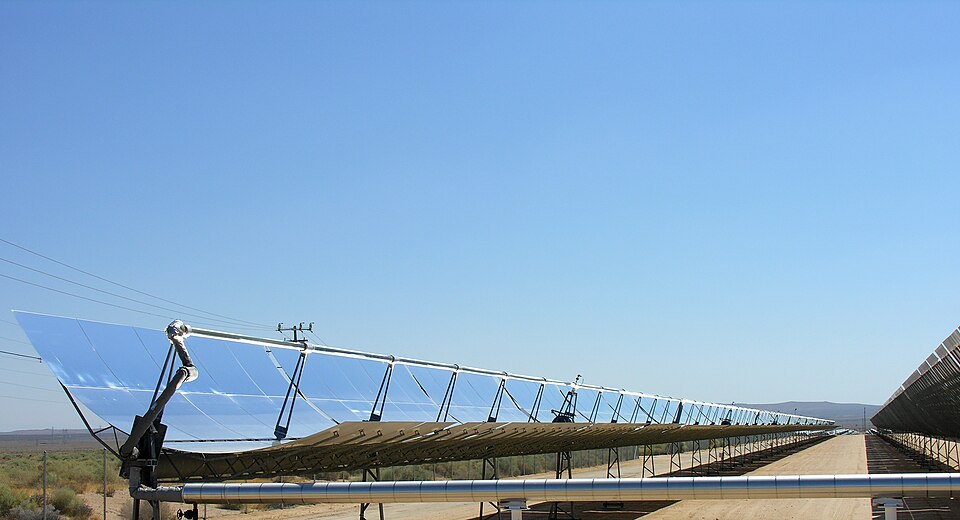
Parabolic-trough solar collectors: a general application photograph · Kjkolb · Wikimedia Commons · CC BY 2.5
An approach that can adapt to different needs
Cooling requirements vary with location and purpose. A modular structure that can accommodate different needs is therefore central to the research. We consider the entire process, from collecting solar energy to delivering useful cooling. Component matching, thermal control and emitted sound are treated as related design questions that need to be addressed together.
From theory to design, from design to measurement
Led by Burdur Mehmet Akif Ersoy University, the project brings together researchers from İnönü University and Süleyman Demirel University with expertise in physics, mechanical engineering and renewable energy. The research plan spans numerical modelling, component development, fabrication and experimental assessment. The aim is to examine calculation guided designs through measurement and identify both the opportunities and the limitations of the proposed approach.
Building knowledge for future applications
The longer term motivation is to broaden the settings in which renewable energy can support refrigeration. Potential uses such as beverage cooling and outdoor cooling help guide this investigation. The project aims to contribute scientific publications, new research questions and postgraduate researcher training, while also assessing opportunities for further technological development and practical application.