
Where Thermoacoustics Is Applied

Thermoacoustics uses energy exchange between heat and sound waves. A temperature difference can generate acoustic oscillations; in the reverse process, acoustic power can transport heat from a cold region to a hot region. These two operating modes open different possibilities for energy conversion and cooling.
The examples below introduce applications and research directions across the field. Maturity varies between applications; efficiency, cost and environmental benefits depend on the heat source and the design of the complete system.
1. Refrigeration and heat pumping
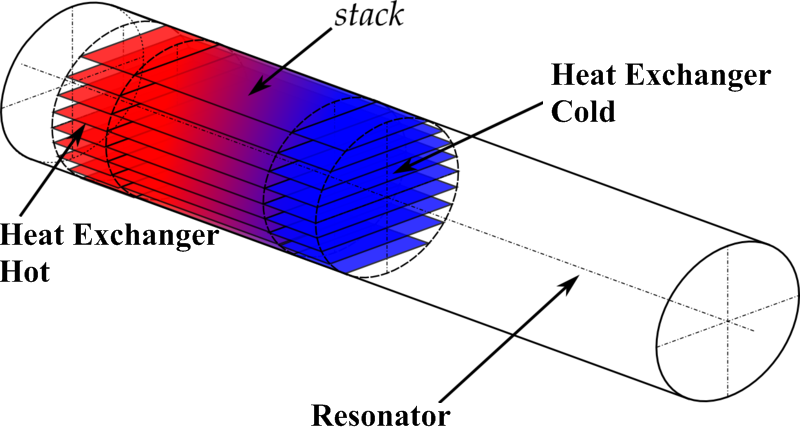
An oscillating gas exchanges heat with solid surfaces inside a stack or regenerator. Suitable phase relationships and heat exchangers allow heat to be extracted at the cold end. Food preservation, thermal management of electronics and specialised coolers are areas of investigation. Channel spacing, working gas and acoustic losses are central design considerations. Swift (1988) and Tijani et al. (2002).
General schematic illustrating thermoacoustic energy conversion; this is not a design from our project. — Gruick70 (Gruik70); İngilizce sürüm Pashute. Wikimedia Commons · CC BY-SA 3.0. Görsel yalnızca gösterim boyutunda ölçeklenmiştir / Display size only.
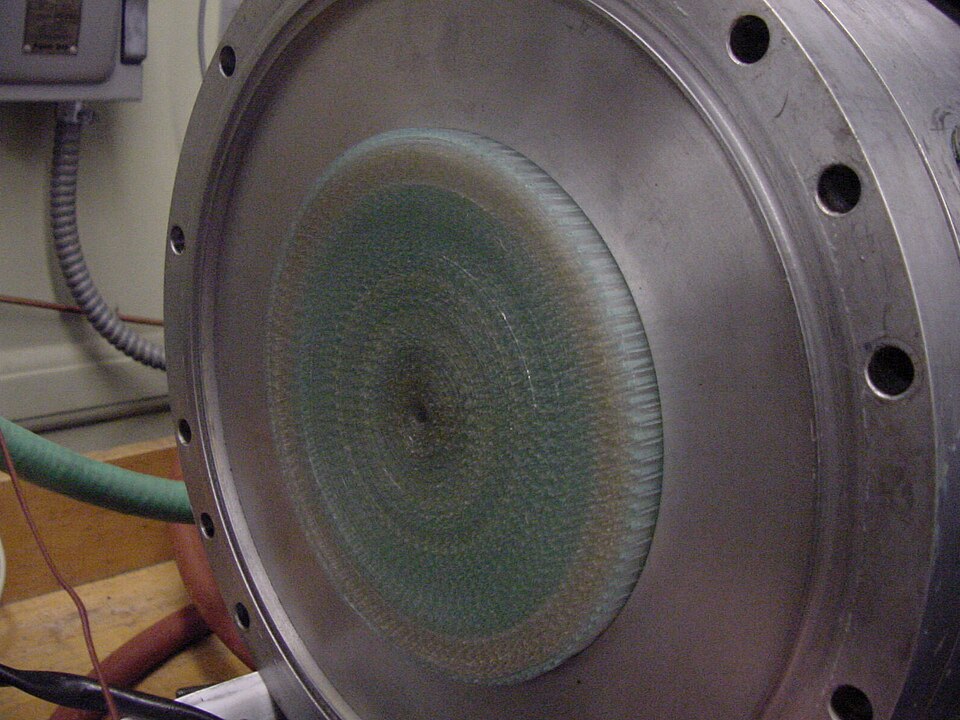
Example of a parallel plate stack, a structure used to study heat exchange between oscillating gas and solid surfaces. — Aadiwa (English Wikibooks). Wikimedia Commons · CC BY-SA 2.5. Görsel yalnızca gösterim boyutunda ölçeklenmiştir / Display size only.
2. Acoustic power and electricity from waste heat
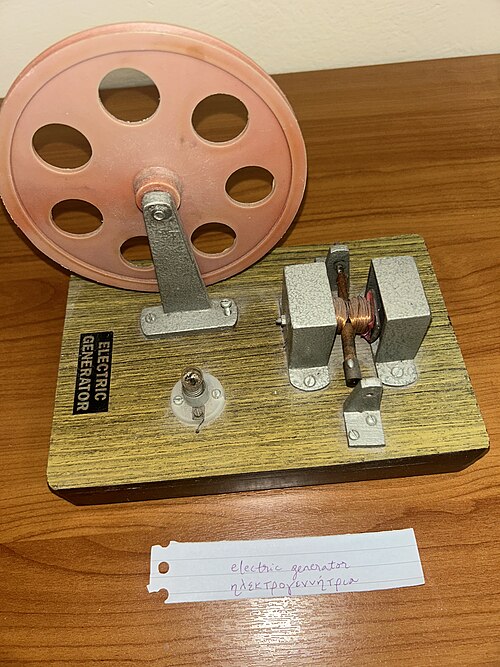
A thermoacoustic heat engine can convert a temperature difference into acoustic power. A suitable electromechanical transducer can then convert this power into electricity. Industrial waste heat recovery is one research goal. Engine performance and the performance of a complete electricity generation system require separate assessment. Backhaus and Swift (1999); Jin et al. (2015).
Educational model of an electromagnetic generator. It illustrates electrical conversion; it is not a thermoacoustic generator or a linear alternator. — Jrs9550. Wikimedia Commons · CC BY-SA 4.0. Görsel yalnızca gösterim boyutunda ölçeklenmiştir / Display size only.
3. Solar powered refrigeration
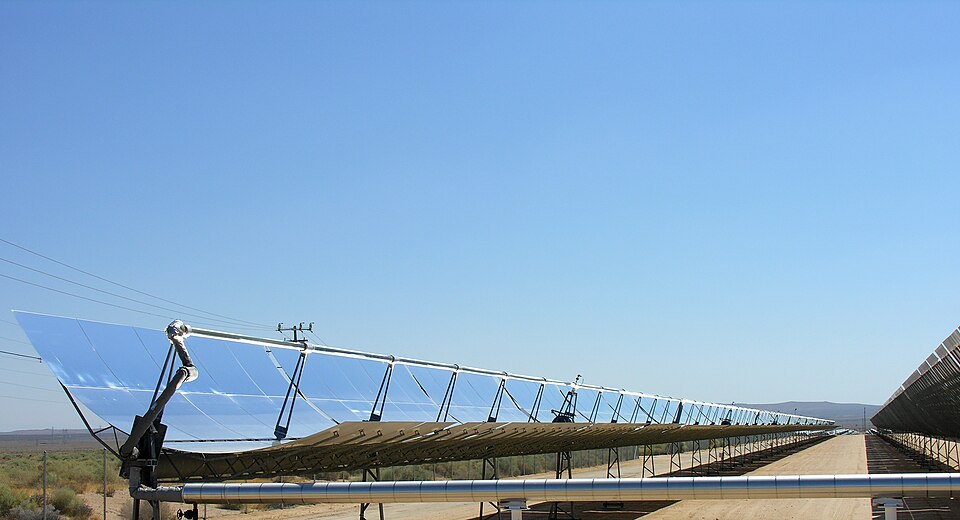
Solar heat can supply a thermoacoustic driver, which in turn powers a refrigerator. The experimental system reported by Adeff and Hofler in 2000 is an early example. Variations in solar input, thermal storage, starting conditions and component matching are significant design considerations. Adeff and Hofler (2000), institutional open repository.
Parabolic trough solar collectors illustrate solar heat collection. This photograph does not show a thermoacoustic refrigeration facility. — Kjkolb. Wikimedia Commons · CC BY 2.5. Görsel yalnızca gösterim boyutunda ölçeklenmiştir / Display size only.
4. Cryogenic cooling
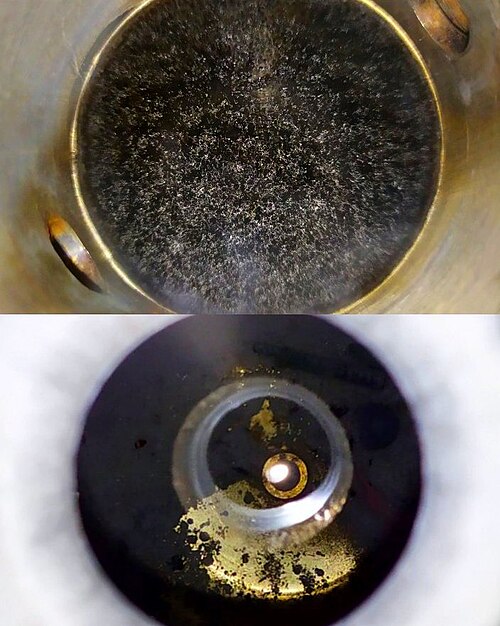
Thermoacoustic drivers have been coupled to systems such as pulse tube refrigerators for low temperature operation. Not every pulse tube cooler is thermally driven; many use a mechanical compressor. Driver type, moving parts at the cold end and target temperature therefore need to be considered together. Radebaugh (2003), Pulse Tube Cryocoolers.
Liquid nitrogen in a Dewar vessel illustrates the cryogenic environment. The photograph does not show a thermoacoustic cooler. — Ryabitskii. Wikimedia Commons · CC BY 4.0. Görsel yalnızca gösterim boyutunda ölçeklenmiştir / Display size only.
5. Natural gas liquefaction

Supplying a cryogenic cooling stage with thermally generated acoustic power has been investigated for natural gas liquefaction. Matching the heat source, acoustic power transmission and low temperature cycle is central to this approach. Radebaugh (2003); Jin et al. (2015).
Wilhelmshaven LNG terminal illustrates natural gas infrastructure. It is not a photograph of a thermoacoustic liquefaction system. — Din21 / Deutsche Energy Terminal. Wikimedia Commons · CC BY-SA 4.0. Görsel yalnızca gösterim boyutunda ölçeklenmiştir / Display size only.
6. Research, education and demonstrations
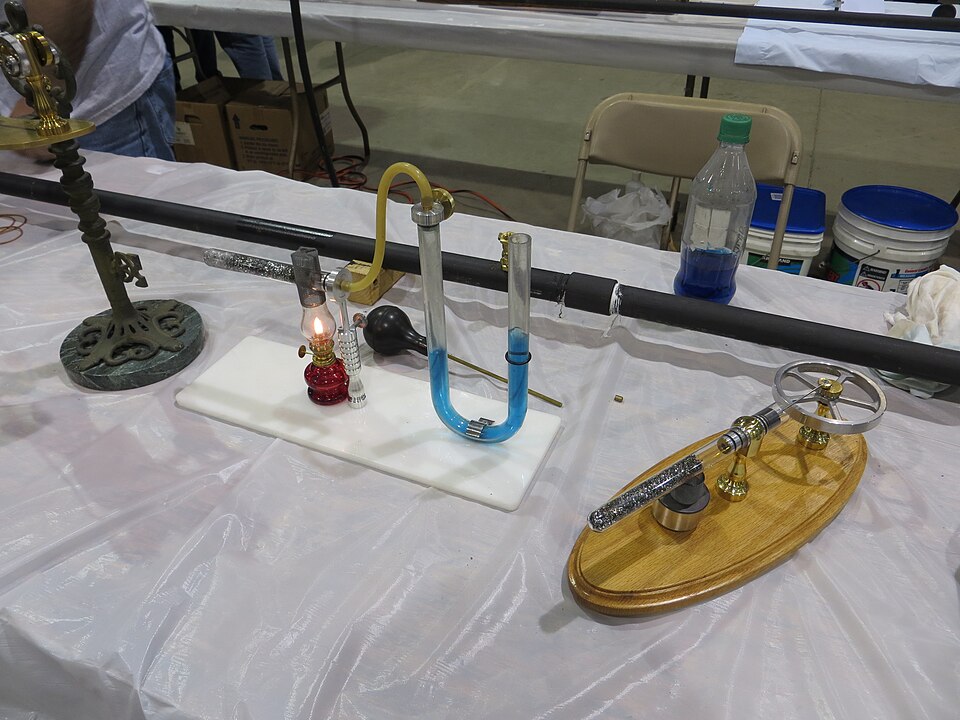
Heat–sound interaction provides a useful setting for teaching resonance, wave motion, phase relationships and energy conversion. Experiments such as the Rijke tube make heat driven oscillations audible. The field also supports university laboratory work in measurement, modelling and design. UCLA Rijke tube demonstration; Swift (2017).
Heat engine demonstration setups at a model engineering event. This image represents an educational setting; it is not identified as a specific thermoacoustic prototype. — 1sfoerster. Wikimedia Commons · CC BY-SA 3.0. Görsel yalnızca gösterim boyutunda ölçeklenmiştir / Display size only.
Further reading
The links above lead to original publications, scientific reviews and institutional resources. Measuring the complete system, from heat source to useful load, is essential when assessing claims about cooling power, electrical output and efficiency.